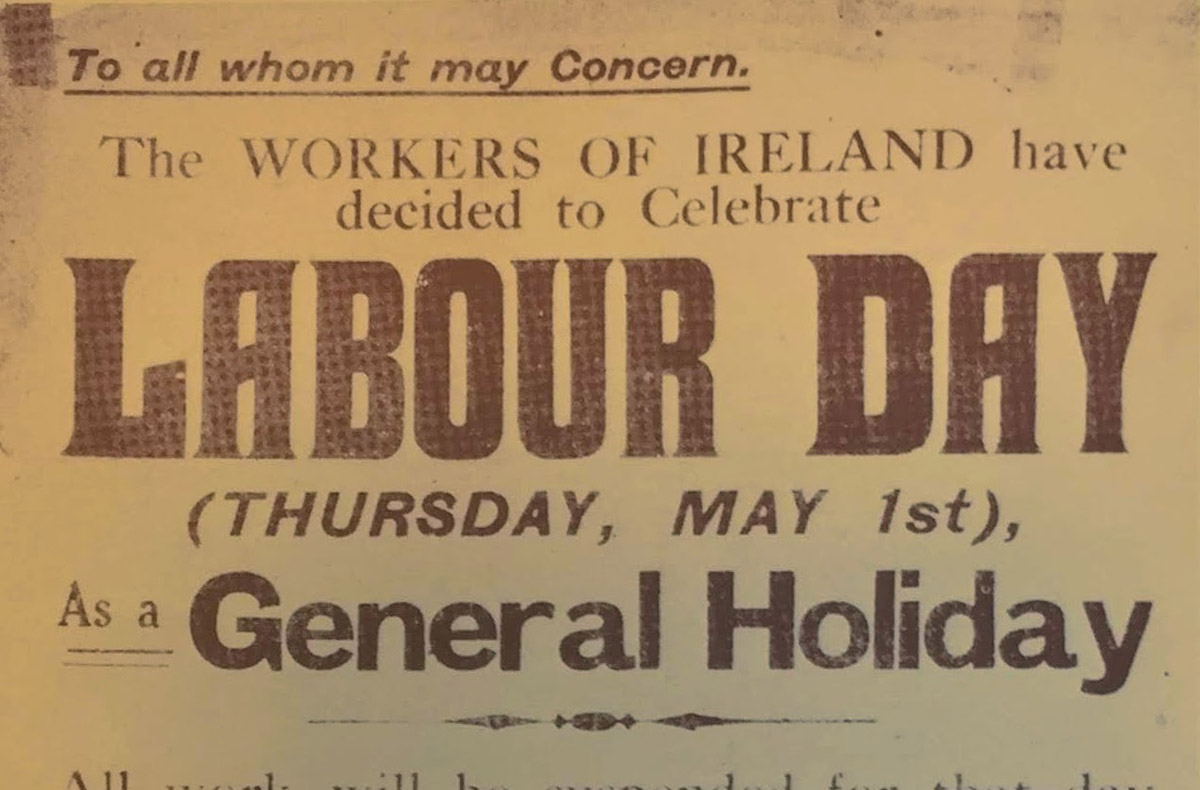
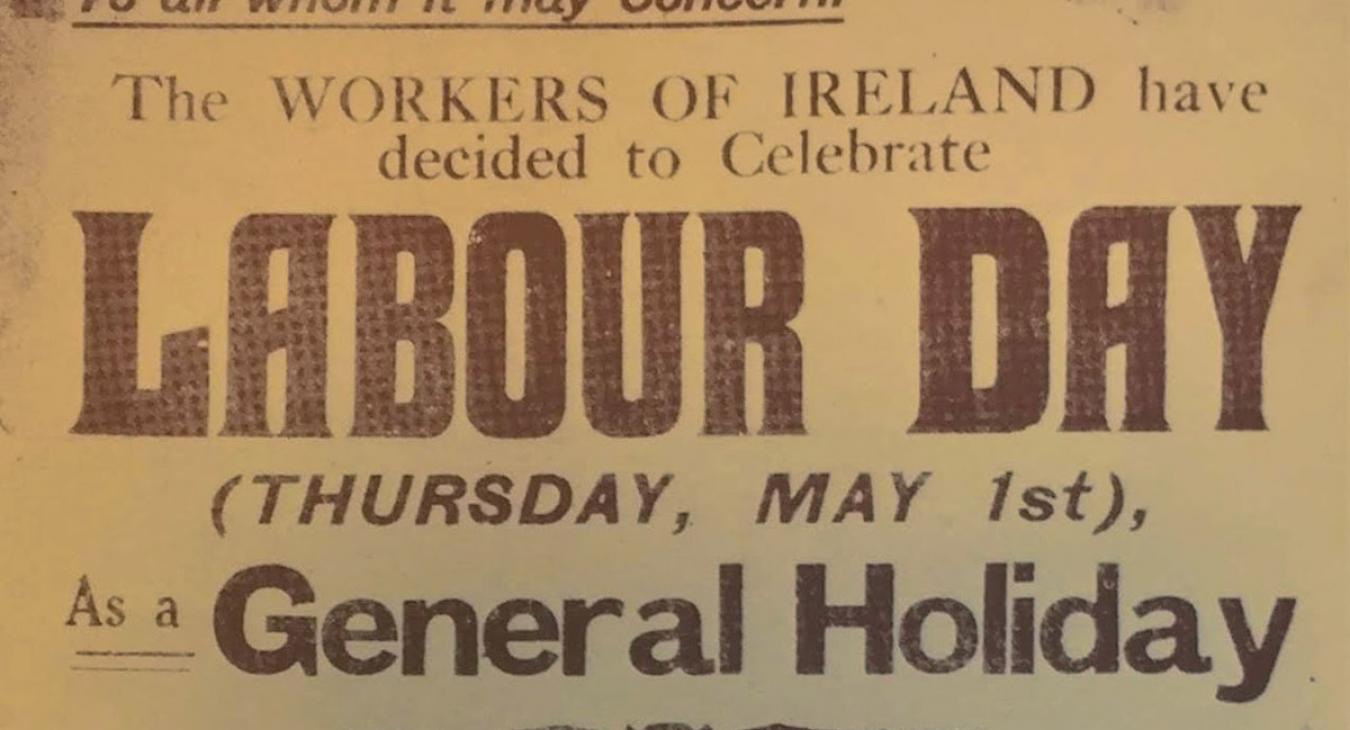
Dublin's Lord Mayor, Councillor Oisín Quinn, today opened the innovative Dublin Tenement Experience: Living the Lockout, a performance and interpretation-based exhibition, on Henrietta Street in Dublin's North Inner City. This is the first in a series of activities to mark the centenary of the historic 1913 Lockout and is part of Ireland's Decade of Commemorations.
This project – which is a joint initiative of Dublin City Council, Congress and the Irish Heritage Trust – will open to the public for two months only, from Thursday, 4 July 2013 and will continue until the end of August at No.14 Henrietta Street. (For further information and ticket sales see http://bit.ly/19v9o2r.) The 35-minute drama element of the experience is performed by the award-winning ANU Productions.
The Lord Mayor said: 'this project is groundbreaking. It brings history to life. This large early Georgian house, originally designed for one family, by the turn of the last century had become a typical Dublin tenement and was home to more than 100 people. Entering the ground floor now is like entering a time capsule which transports the 21st century visitor back to 1913. The use of drama, archival records, photographs and personal testimonies, in what is quite a compact space, brings the history of the experience to life. I would encourage as many people as possible to come and see the hour-long Dublin Tenement Experience: Living the Lockout and get a real taste of what life was really like for thousands of people in the city 100 years ago."
Sally Anne Kinahan, Congress1913 Commemoration Committee commented: "Dublin Tenement Experience: Living the Lockout features intense and passionate scenes that capture the heady optimism of the strikers at the beginning of their struggle in August 1913; the desperation of the families as they faced ruin and possible starvation in the run-up to Christmas 1913 and the hard choices that confronted the workers and their families as the Lockout neared its end in early 1914. The drama, which was driven from documentary material, also portrays the heroic determination of the workers and their communities to bring about lasting change in relation to their right to organise themselves in a union and to improve the grim living conditions of the tenements."
Dublin City Council's Heritage Officer, Charles Duggan, explains the significance behind the use of 14 Henrietta Street – which is part of the single most intact and important architectural collection of individual early-eighteenth century houses, as a street, in Europe – in Living the Lockout.
"In 2006 Dublin City Council adopted the Henrietta Street Conservation Plan to safeguard and celebrate the heritage of the street, a central plank of which is a commitment to facilitate better public access to and mediation of the cultural heritage of Henrietta Street. In this context, in 2008, the Council initiated a phased programme for the conservation and repair of 14 Henrietta Street. Following the completion of major structural works to safeguard the house, we repaired and reinstated the windows and doors last year. Further phases of work will be needed to bring the house back into permanent use."
Kevin Baird, CEO of the Irish Heritage Trust – a charity – said that he was delighted with the huge interest that has already been shown in this project: 'the Irish Heritage Trust was set up to look after special places and help create opportunities for people to get involved in heritage in Ireland. There has been considerable interest generated locally and further afield in the project and we hope to build on this passion and support for the longer term. Every part of 14 Henrietta Street evokes the changing circumstances of all the people that lived here and visitors to the house will have the chance to glimpse the centuries of family life these walls have absorbed."
Sally Anne Kinahan concluded by saying: "One hundred years on from the Lockout, workers in Ireland still have no legal right to collective bargaining, namely to collectively negotiate their pay, terms and conditions of employment. In fact, we"re one of only five EU countries where this is the case. In addition, the campaign for decent work is particularly relevant during this time of austerity where many employers have used the global recession to drive down the pay and conditions of workers."
Booking Details
Dublin Tenement Experience: Living the Lockout will be open six days per week – it's closed on Wednesdays – from 4 July to 31 August 2013 only. Tickets – which cost €5 for adults with a concession rate of €3 – will be on sale via http://bit.ly/19v9o2r and early booking is advised as thousands of visitors are expected over the next couple of months. Tickets can also be purchased at 14 Henrietta Street itself or by phone – for groups – at 01-8748030.
Sharing Stories
The Dublin Tenement Experience: Living the Lockout website http://bit.ly/19v9o2r provides people with an opportunity to access stories, photographs and records and to share their own recollections or experiences of Dublin's tenements.