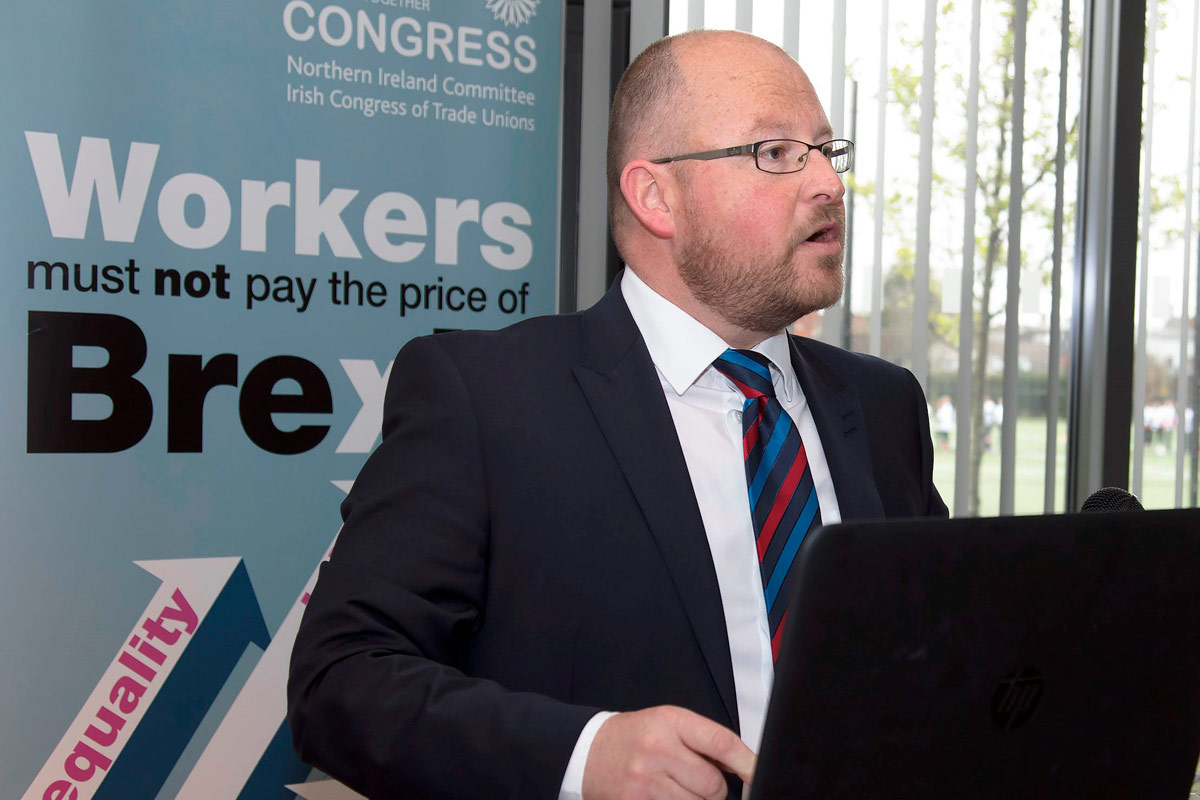
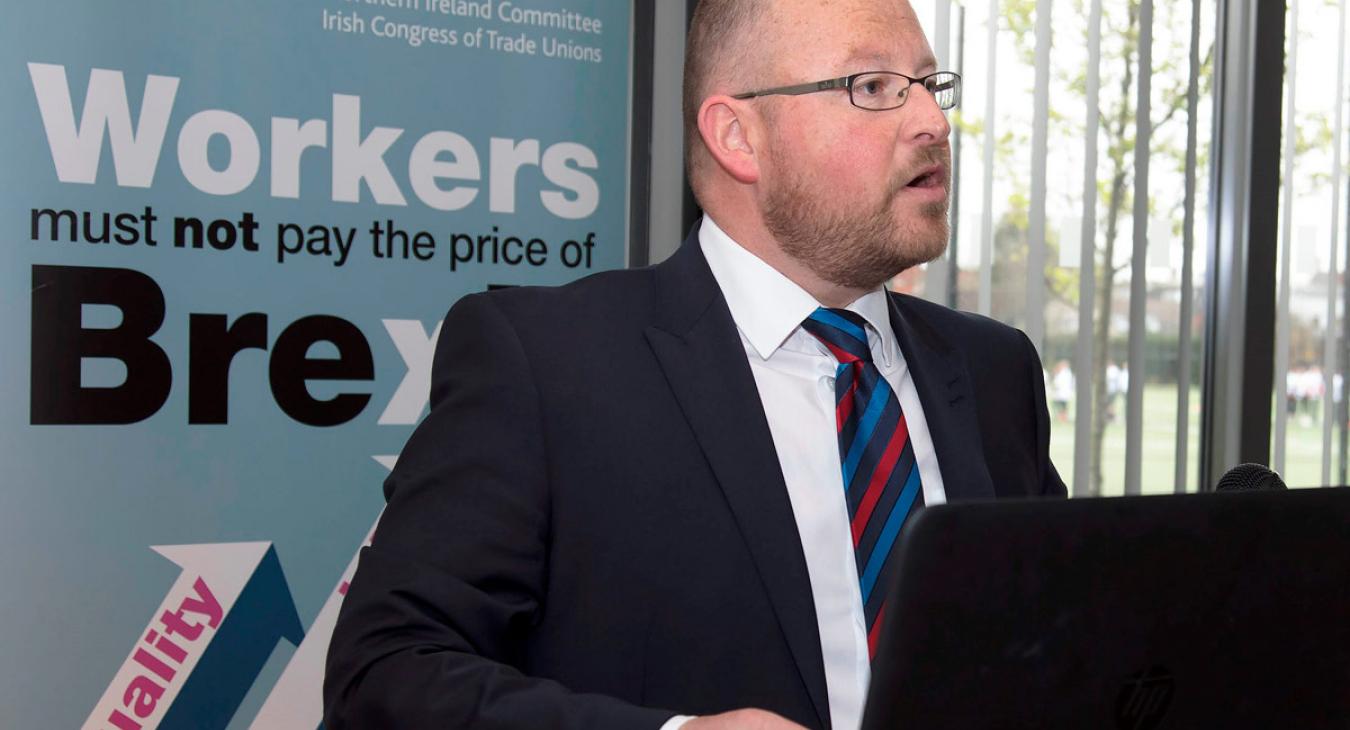
The following is Owen Reidy's Op-Ed in the Irish Times (22 Oct 2018)
Politicians on both sides of the Irish Sea and in Europe are trying to find their way though a maze of borders, barriers and Brexit red lines. These feverish weeks of negotiations are entering their final stage and tensions are high.
We in the all-island Irish trade union movement know a thing or two about negotiations. I would suggest there are five key elements for any negotiation, whether it is about a pay claim or extracting your state from the EU.
- You need to know what you want.
- What you want has to be somewhat achievable and realisable.
- Your position has to have a level of flexibility.
- You need to have the capacity to bring your people with you.
- You don't have to like the other side but you need to ensure they understand ultimately what your bottom line is to secure an agreement.
I will leave it to readers to determine how successful or indeed competent the British Tory government has been to date in such negotiations when considering its performance under these five criteria.
Brexit is not the reason why devolution collapsed but is one of the issues preventing its restoration
There has been a lot of talk about the Irish Border, understandably so, given our history. But for the Irish Congress of Trade Unions, which represents and organises nearly 800,000 workers across the island including 200,000 workers in Northern Ireland through our 32 affiliate trade unions, we are concerned about the borders in this Brexit debacle.
Exacerbated the tensions
Our position is driven by the interests of workers and their families from places such as Cork and Galway but also Ballymena and Belfast and all in between. Our membership in Northern Ireland is made up of workers who are British, Irish, and in some instances both, and international workers who have decided to make Northern Ireland their home. Unfortunately, due to the current absence of devolution, there is no forum for Northern Ireland to express its voice. This leads to a situation whereby the Brexit issue has exacerbated the tensions between unionism and nationalism. Brexit is not the reason why devolution collapsed but is one of the issues preventing its restoration.
For sound political, economic and social reasons, and in particular for the ongoing building of peace and reconciliation, the possibility of a no-deal Brexit and a hard border on the island is unacceptable to us.
However, equally we argue that a border in the Irish Sea within the UK between Britain and Northern Ireland is also unacceptable.
Northern Ireland exports £1.09 billion of goods to the Republic of Ireland but more than £8.66 billion to Britain. Aside from the political arguments being made by some, an economic border within the UK will damage workers" interests in Derry, Newry and Belfast irrespective of those workers" views on the constitutional issue.
Damaging
Equally, a concern articulated by the Irish Government that an economic border between these islands would be damaging is also true. The Republic exports more than €13.8 billion worth of goods to Britain. Therefore, this will undoubtedly impact on workers in the manufacturing sectors such as agrifood, chemicals etc and they will be damaged.
So the concerns being expressed by nationalism and unionism in Northern Ireland about a hard border on the island and a border within the UK respectively are well founded, even though they are largely articulated for competing constitutional concerns.
For our part, if Brexit is to happen we have to ensure it reflects the will of the people. Using a trade union analogy: if I had a ballot for strike action and the result was 52 per cent in favour and 48 per cent against, it would be the worst possible result and would be inconclusive, as the membership would be clearly very divided.
You would be wise not to proceed with a strike with such a result. Therefore, in the final analysis, the only possible Brexit that can emerge is the softest possible. Of course the British Tory party is irrevocably divided on this – it always was divided on Europe.
However, even people in the British political establishment privately accept the capacity of the UK doing better trade deals in the future is illusory.
Unionist concerns
So the UK as a whole should be in a customs union with the EU. This would generally negate the need for a hard border, facilitate a free-trade agreement and address unionist concerns regarding Northern Ireland being treated differently from the rest of the UK.
We have to ensure that workers on this island do not pay the price of Brexit.
Crucially for us, it would be less damaging for those very same workers in Ballymena, Derry, Newry and Belfast regardless of whether they are British or Irish or international and would also be less damaging for the many thousands of workers in the Republic who manufacture goods. We have to ensure that workers on this island do not pay the price of Brexit.
Finally, returning to the process of negotiations, there are two important additional elements to a successful negotiation. Firstly, that you negotiate in good faith; secondly, you avoid humiliating the other side and a zero sum win/lose outcome, as you always have to return to the bargaining table and people have long memories.
Owen Reidy is the Assistant General Secretary with the Irish Congress of Trade Unions.