
It's approaching that time of year again, where people start thinking about, dare I say it, Christmas. I know, I know, I can hear the tut at my even mentioning of the word aloud this side of Halloween. But like it or lump it, as the evenings continue to close in and people get used to going home to light the fire in the evenings we cannot help but start to think about Christmas nights out, and Christmas nights in, and being reunited with family and friends, and giving and receiving gifts, and well,....shopping!
Call it the power of advertising. Call it being organised. Call it a guilty pleasure. Call it what it is. As a society we love Christmas, and whether we like to admit it or not the mere thought of this time of year brings smiles to most people's faces and elicits feelings of sweet anticipation and nostalgia. We can almost smell those candles, taste those special meals, and hear those familiar songs in our mind.
And aside from all of this, the period of time in the run-up towards Christmas is a time of year which our high street retailers really depend on. It is the time of year that our high streets have traditionally come alive, with a surge in sales. This spike has been said to carry businesses through other quieter shopping periods of the year.
The last number of years, however, has seen us grow used to the closure of big-name retailers from our high streets and a real sense that we"re experiencing the end of the high street. As more and more people do their shopping online we are becoming more accustomed to our high streets being more a motley of charity shops, nail bars, coffee shops, bookmakers, vape shops and empty retail units than somewhere we might actually want to go and splurge our hard-earned money or even somewhere that we will find the item that we"re after on the high street.
So, are we right? Are we experiencing the end of the high street? And does this equate to the end of or decline of the retail sector?
First things first, the media headlines of shop closures and the sense being projected that we are experiencing the end of the high street is warranted, but only to an extent. Recent years have seen the closure of what were once hallmark stores of our high street such as British Home Store or Woolworths or Toys R"Us or Dixons. Recent weeks have seen the closure of Thomas Cook stores from our high street. Recent days have seen the announcement of plans to close stand-alone Argos stores.
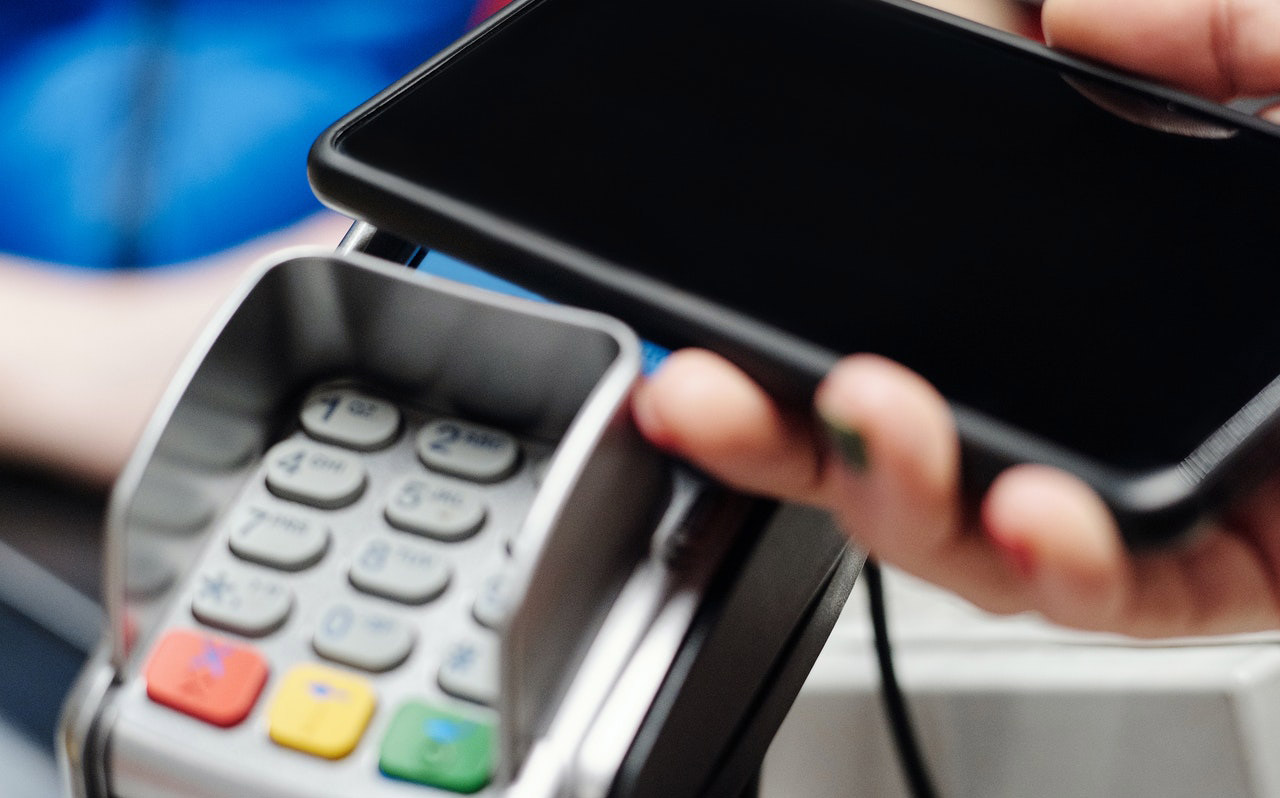
When put in this way, it is hard not to conclude that the traditional high street retailer is struggling. And the data confirms that this is the case. There has been a shift in spending habits within retail, away from in-store and towards online, and about 20% of retail spending is now done online - a quadrupling on five years previous. Furthermore, research by the Resolution Foundation shows that the number of store openings has been lower than, or equal to, the number of closures in each of the last five years. What is more, for more than a decade now, there has been a shift in spending habits between sub-sectors of the retail sector. We are less likely to spend our money now on goods and more likely to spend our money on services and experiences. This means, when given an extra pound to spend, we are less likely to spend it on 'things" than we once were and more likely to spend it on leisure activities, or on a meal out, or on a coffee and a donut. It is this shift in spending patterns which partly explains some of the changes which we are seeing on the high street.
However, whether or not policymakers need to be overly concerned about individual business failures on the high-street or whether or not we chop that up to market forces and conclude that it is people's choices and preferences which dictate what stores are present (or not) on the high street is a matter for debate. This debate needs to start with an honest public conversation about what we want our high streets and city centres to be.
Policymakers do however need to be concerned with how the decline of the high street is impacting on people and workers. Because, of course, the inevitability of the shop closures on our high street has meant job losses for the many thousands of retail workers employed in these stores.
Given, however, that the labour market has been performing quite well in recent years in terms of the creation of jobs, policymakers might conclude that because there has been a net increase in the total number of jobs that policy interventions are not required. As traditional retail declines and experiential and online retail and hospitality grows it might be tempting for policymakers to think - that workers in retail can just seamlessly transition into working in the new jobs created from the growth in these areas. But research shows that this isn't likely to be the case. This is not least because there is likely to be a mismatch in the skills required. But also, research from the Resolution Foundation shows that retail workers will not necessarily happily move into hospitality jobs, even if they are available. More unsociable and uncertain hours, the prospect of less-enjoyable customer interactions and often lower pay means that it's not just a straight job change. The job change in fact often means a downgrading of working conditions.
I would argue then, like with any jobs disruption - policymakers need to ask themselves the following questions in order to minimise the negative impacts for workers whose lives are being deeply affected by our changing high street.
What jobs are being lost? What jobs do we expect those who have lost their job to take up? How do the skills requirements match up? How does each job compare to the other in terms of quality? It is only through doing this can we ultimately understand how our changing high streets are impacting upon our people and our workers.