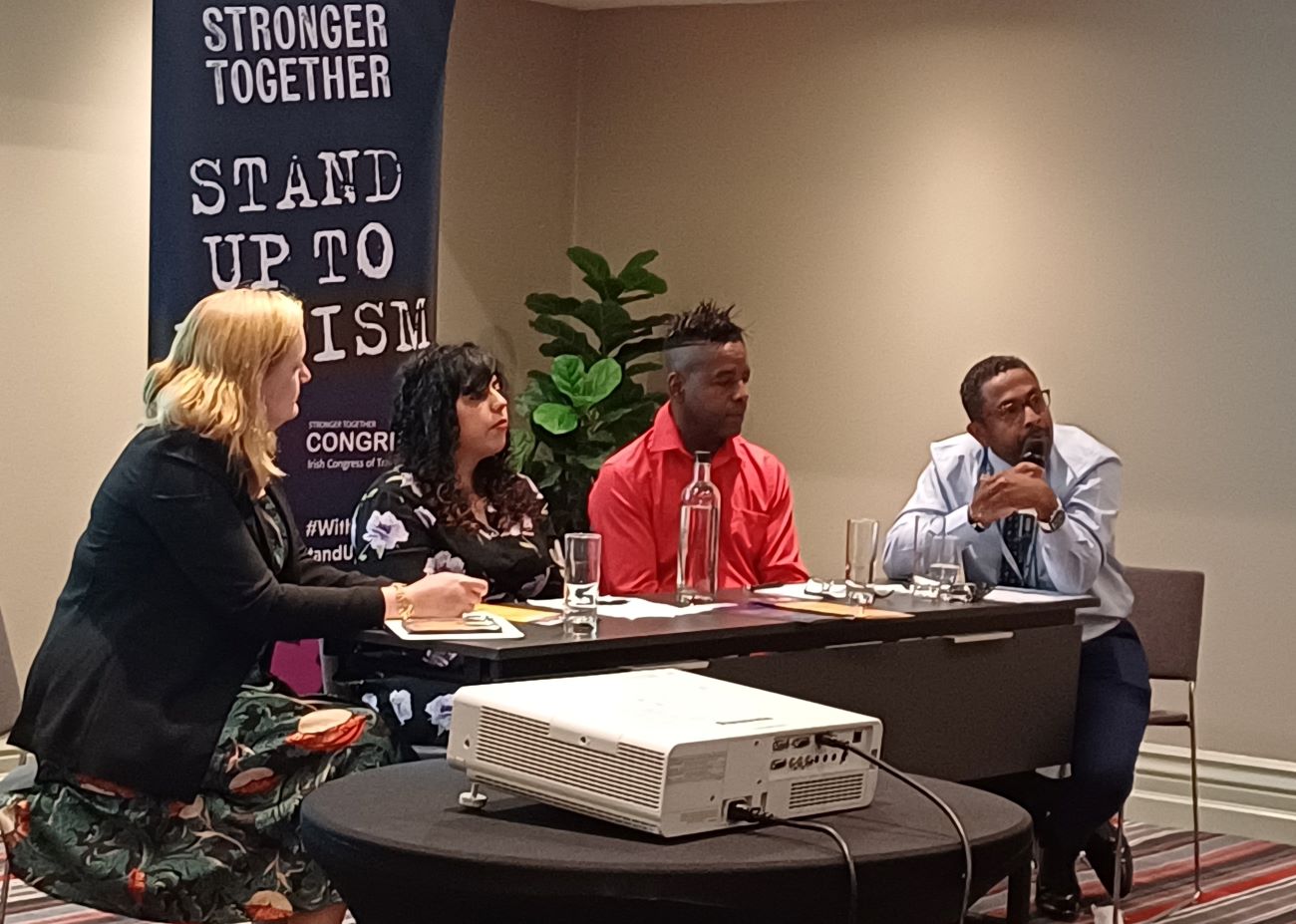
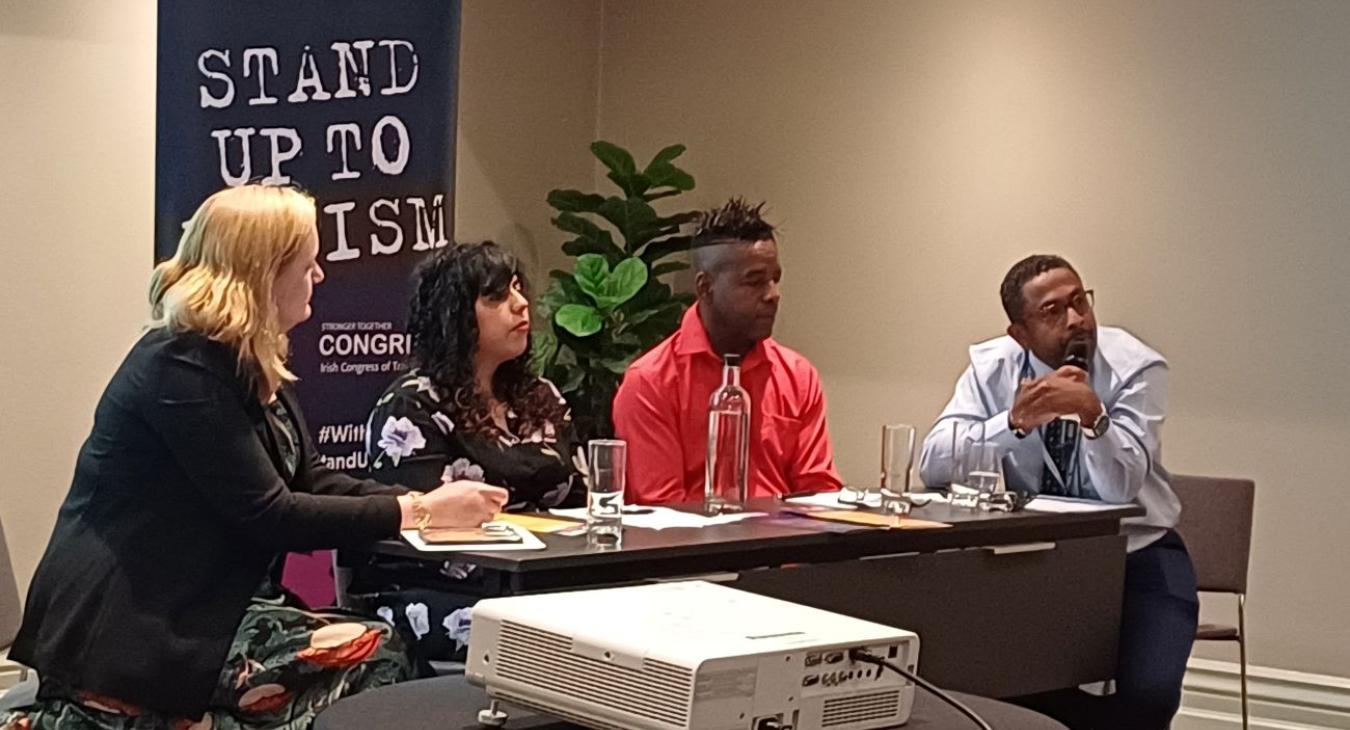
Union delegates gathered in Dublin today for the launch of a report that revealed that workers in minority ethnic backgrounds often experience racism in the workplace. The ICTU-sponsored event was an opportunity to discuss what unions can do to combat racism and other forms of bigotry. Initial findings of the project’s research component, which explores workers’ experience of racial discrimination and the effectiveness of trade union support, were presented.
In his testimony today one worker who had lived in Ireland for thirty years said that migrant workers experienced, low pay, irregular working hours, and how 'he struggled financially to make ends meet'. Another worker said 'Ireland is very different from the country I lived in when I came 7 years ago, and how she had experienced overt racism in her job.
One of the report authors Gordon Ogutu said, 'some workers, because of precarious terms of employment were less likely to report their experience of discrimination, character assassination, harassment, and bullying'. Migrant workers need to have trust in reporting mechanisms so that they will be heard and that workers, who experience racial discrimination, can be effectively supported by union representatives. Union reps need to understand employment and equality laws, so that they can identify incidents of racial discrimination ' he said. Launching the anti-racism toolkit for trade unions Dr. Lucy Michael said 'workers needed to know they were supported in the workplace by union reps who are knowledgeable about and interested in tackling racism. 'The recommendations we are making to the government include strengthening access to justice and urgent implementation of work under the National Action Plan against racism. Against a background of strong solidarity work against overt racism unions now need to think strategically about the different forms of racism inside and outside workplaces ' said Dr.Michael.
ICTU General Secretary Owen Reidy said 'unions have a vital role to play in encouraging solidarity, not division, and racism has no place in any reputable workplace. The event is a culmination of a 10-month multi-strand project; the response from individual trade unions has been remarkable and a real testament to the movement’s intolerance of bigotry of any kind '.
Minister for Integration, Joe O'Brien T.D., added 'As Minister of State with responsibility for Integration I am proud to see the Trade Union Movement front & centre of challenging the issue of racism in the workplace and all areas of life. Racism is an insidious danger that threatens not only the person subjected to it but society as a whole - damaging our social fabric and sense of community. It is incumbent on everyone to challenge racism and racist remarks and actions whenever we encounter them. The very essence of the Trade Union movement is one of solidarity so it is fitting that ICTU is leading such an important campaign'
The newly appointed Special Rapporteur on Racism, Dr Ebun Joseph, gave details of the National Action Plan and spoke about the everyday experiences of migrant workers and the discrimination they encountered in the workplace.
ICTU Anti-Racism Workplaces and Trade Unions Coordinator, Dr David Carroll said 'while the research launched today illustrates that there are gaps to be filled, and more work to be done to tackle racism as effectively as possible, the trade union movement is up for the challenge.
This report highlights the experiences of racism in workplaces and union representation of workers from minority ethnic and migrant backgrounds in the Republic of Ireland and Northern Ireland. It details aspects such as the experiences of making or supporting complaints about racial discrimination or harassment, experiences of advocating for non-discrimination in the workplace, and the role of trade unions in addressing racial discrimination in the future.
The report reveals that union members from minority ethnic and migrant backgrounds in Ireland and Northern Ireland frequently experience both direct and indirect racial discrimination in the workplace, ranging from overt racism and racial slurs to subtle microaggressions and exclusionary practices.
Reporting such discrimination is often hindered by the precarious nature of the jobs, the sensitive nature of the incidents, ineffective complaints processes, and fear of victimisation, which can include demotion, social isolation, or job loss.